Recent skylight work
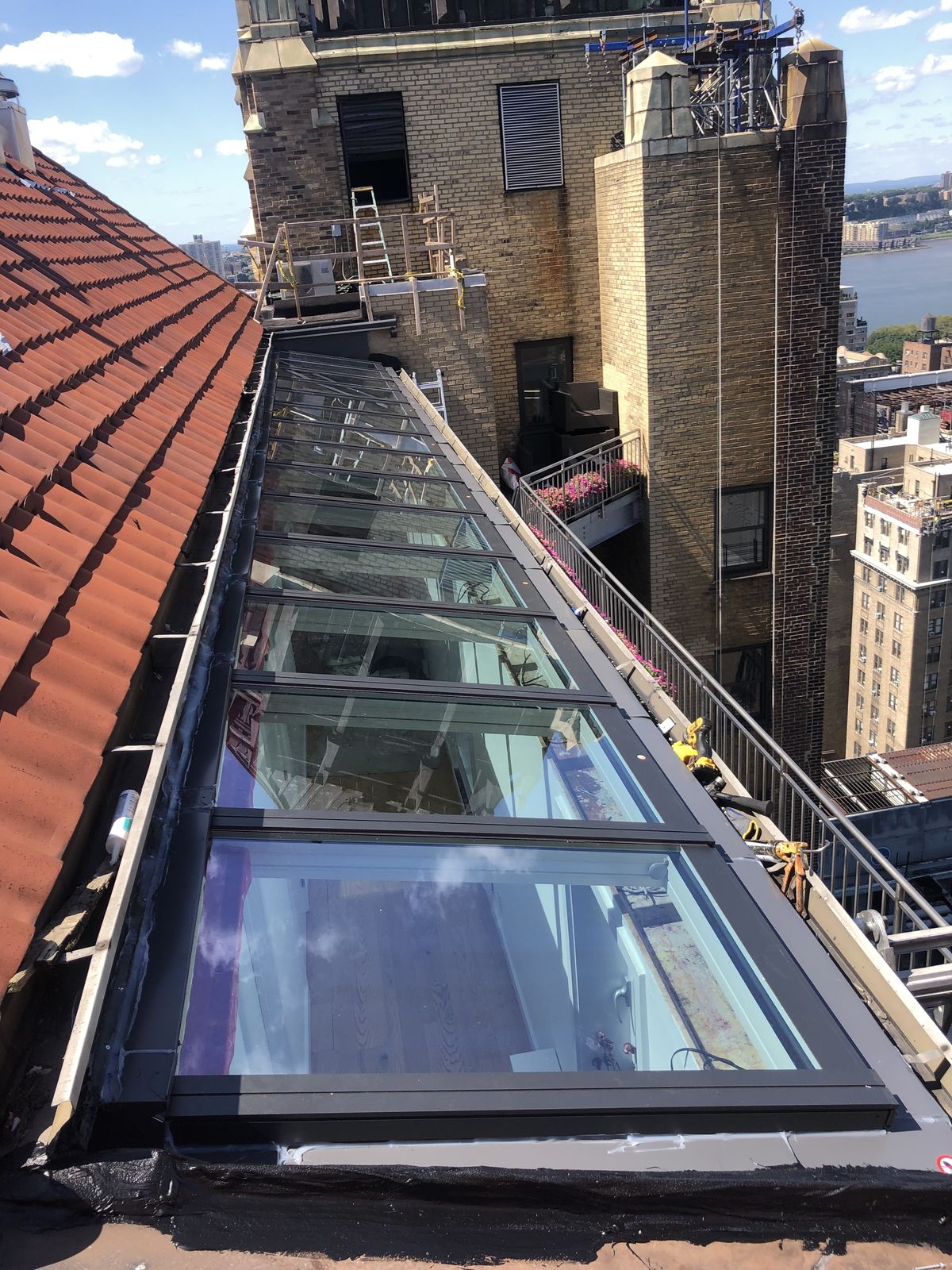
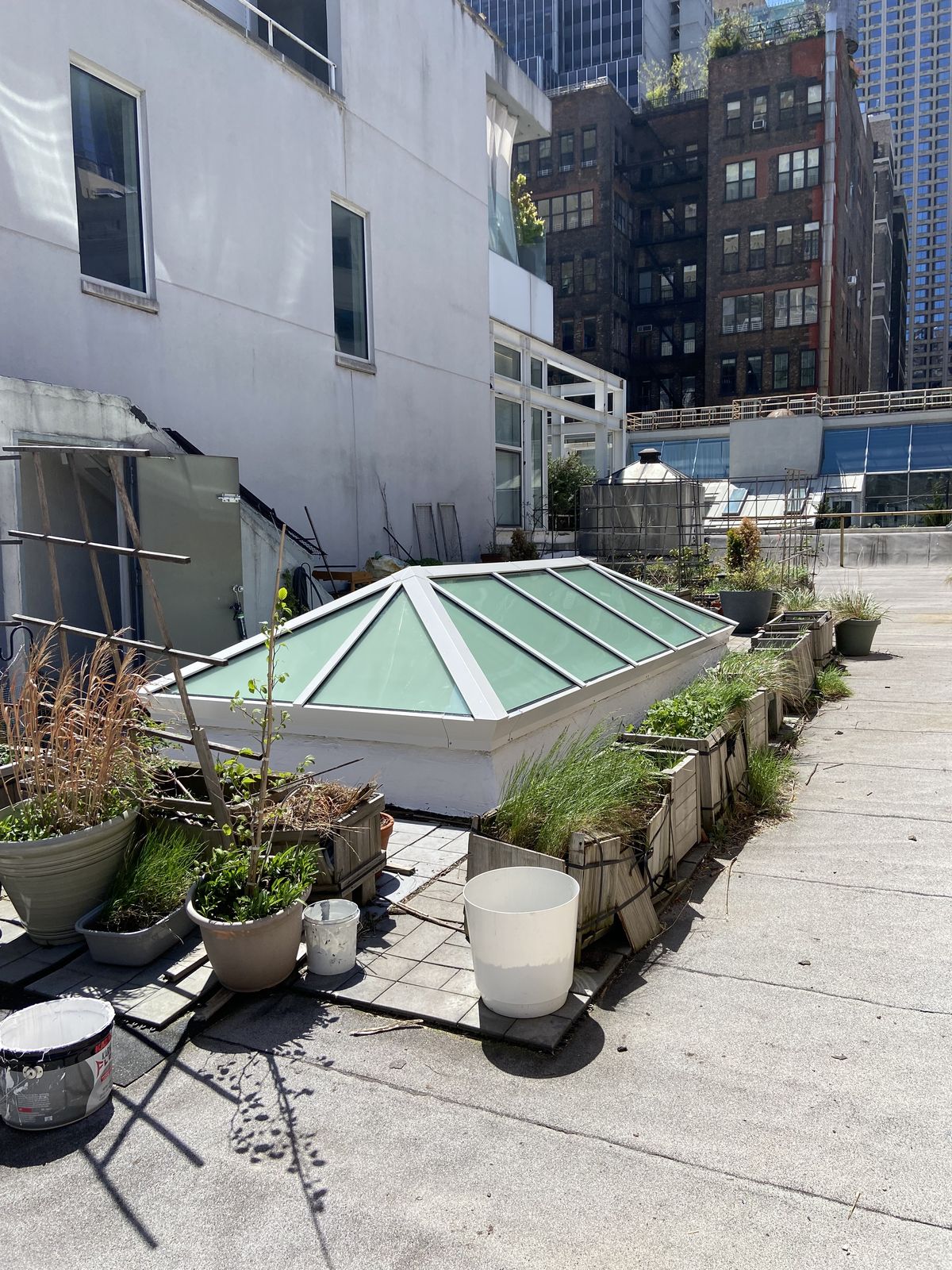
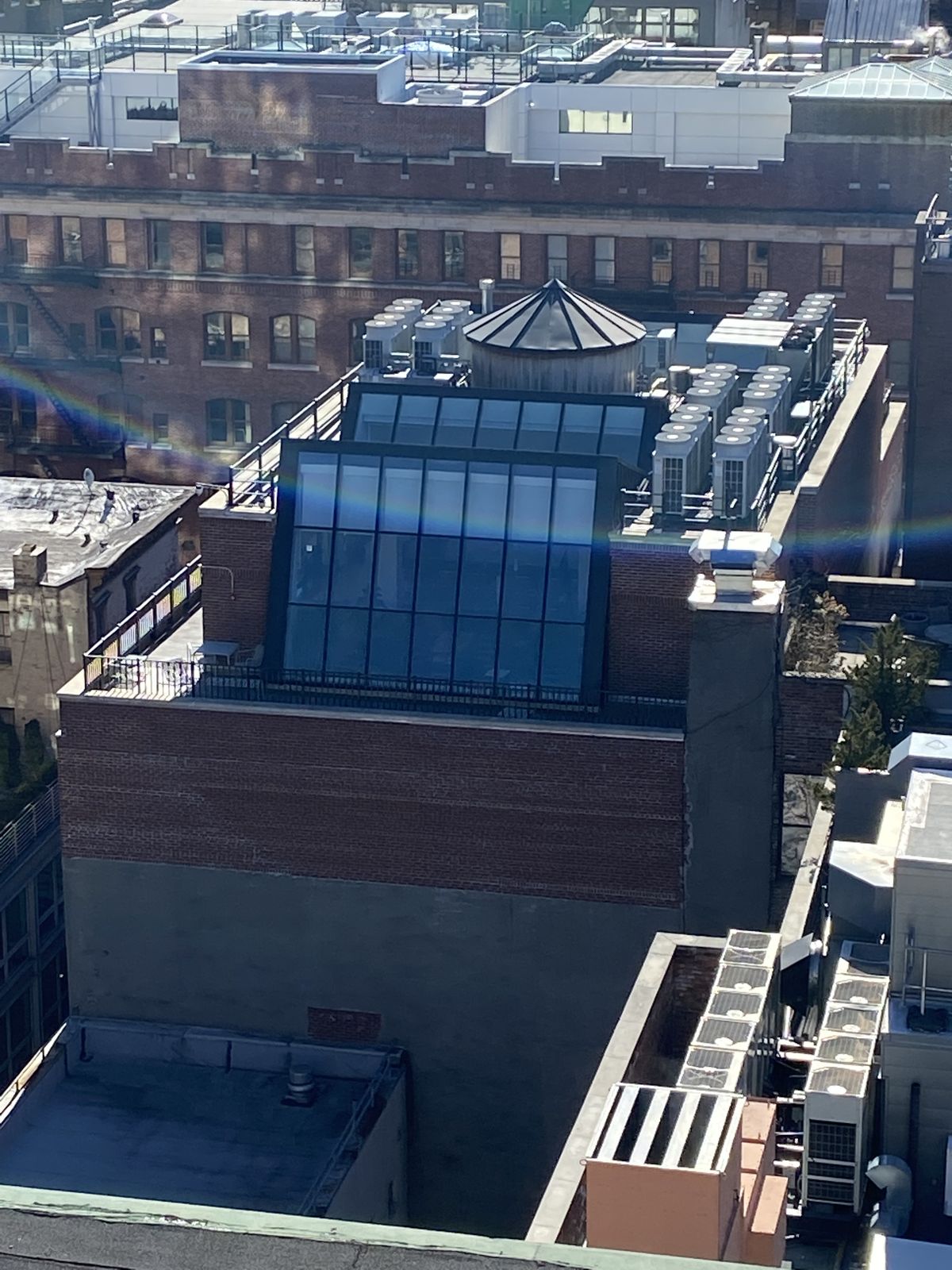
Manhattan skylight work is a different discipline: landmark approvals, roof access on a block with no driveway, hoisting over parapets, and flagging permits on busy streets. We do it routinely, our recent work includes a six-unit VELUX ridge system for the Japanese Consulate on East 67th Street, boom truck and permits included, and penthouse sloped-glazing runs high over the Hudson.
Leaking skylight in Manhattan? Start with a professional assessment from New York's original skylight specialists. Skylights are all we have done since 2005: licensed and insured (LIC# 2084179), VELUX Trained & Approved, an official VELUX dealer, 4.8 stars on Google, and a 10-Year No Leak Warranty on every unit we install. Roofers and handymen do skylights on the side; we are the specialists the roofers call. Leaks are the number one reason Manhattan calls us. A stain spreading under a brownstone stair skylight, water at a bulkhead, a drip through penthouse glazing in a driving rain: none of that tells you what actually failed. It could be the flashing, the seals, or a unit that has reached the end of its life, and on older brownstone and loft skylights it is usually the last one. We come out, find the real cause, and give you a straight answer and a price for the right fix, which is usually a new unit installed to landmark and building standards. We work through building managers and carry the certificate of insurance the building asks for. Active leaks go to the front of the schedule.
For homeowners, that means brownstone and rowhouse stair skylights done to LPC standards; for architects and general contractors, it means ridge systems, custom glazing, and roof-access units with engineering documentation ready for submittals. Prices for standard units are public on our pricing page, a courtesy almost unheard of in Manhattan contracting.
Call the skylight company first. A roofer sees a roof problem and caulks around the unit; it holds for a season and comes back, and on a landmark building the wrong fix can also be the wrong filing. A skylight specialist can tell you in one visit whether it is the flashing, the curb or the unit itself, and what the honest fix costs. If the roof around it turns out to be the problem, we will tell you that too.
If it drips on cold clear mornings and stops when it warms up, it is usually condensation on an old single-pane or wired-glass unit, and the cure is a modern insulated glass skylight, not sealant. If it comes in during or right after rain, it is a leak, and the assessment tells you where.
Usually not for long. Old steel-framed and wired-glass units fail at the frame and the seals, not at one spot. We will tell you if yours is the rare exception, but the right answer on most of them is a new unit on a proper curb or flashing kit, and we price that on the spot.
Active leaks go to the front of the schedule, and our phone is answered evenings and weekends, not just office hours. Call (718) 646-7053 any time, tell us it is leaking now, and it is flagged to us the same day so we can get someone out in Manhattan to look at it.
Most of the brownstone belt is: Greenwich Village, Chelsea, the Upper West Side, the Upper East Side, Mount Morris Park, Hamilton Heights and more. A skylight there needs a Landmarks sign off before the DOB permit. When the unit cannot be seen from the street, which is nearly every stair skylight, it is a staff level Certificate of No Effect that usually clears in days. We prepare it as part of the job.
Not by itself. Under the Landmarks rules a skylight is treated as a rooftop addition rather than a window, and the test is visibility in connection with the primary facade. Approval comes first and the timelines are published. There is also a trap worth knowing, which is that landmark review can be required whenever the work needs a Buildings permit, even when nobody on the street can see the unit.
However the building allows. Through the building when the size allows, or hoisted over the parapet with a boom truck and street permits when that is the only way. Our six unit VELUX ridge system for the Japanese Consulate on East 67th Street went in that way, boom truck and permits included.
Yes, and it saves you the middle. Drawings in, submittal package out: dimensions, glazing makeup, U factor, finishes, weights, the flashing detail and the manufacturer cut sheets. We quote supply only or supply and install, and we put the lead time on the quote so the schedule is real.
Yes. Penthouse sloped glazing runs, ridge systems, stair bulkhead glass and engineered custom units are the top end of the catalog and it is where a lot of our Manhattan work sits. Those are quoted per project with full specifications, submittal ready.
The unit prices are, and publishing them at all is close to unheard of in Manhattan contracting. What changes is the installed number, because access, hoisting, building rules and interior finish are genuinely different here. We price that on the visit rather than padding the list. A straightforward replacement on a sound existing curb starts at $2,079 installed, in Manhattan as everywhere else we work.
The roof over a West Village frame house is not the roof over a Tribeca loft or a Harlem brownstone. Each page below is written for what is actually up there.
Most of the Manhattan brownstone belt sits inside a Landmarks Preservation Commission historic district. A skylight on a landmarked building needs an LPC sign off before the DOB permit. When the unit cannot be seen from the street, which is the case for nearly every stair skylight, that is a staff level review, a Certificate of No Effect, and it usually takes days, not months. We have done it before and we build it into the schedule.