Recent skylight work
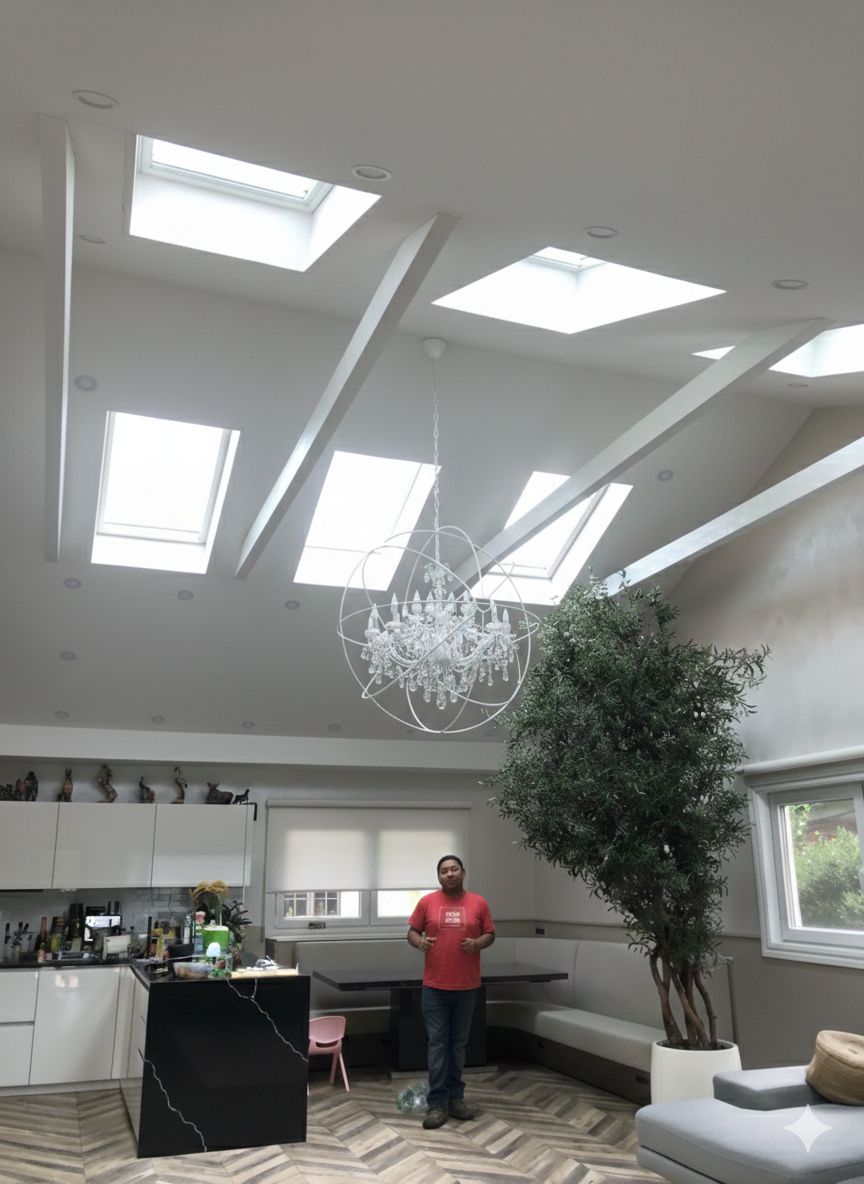
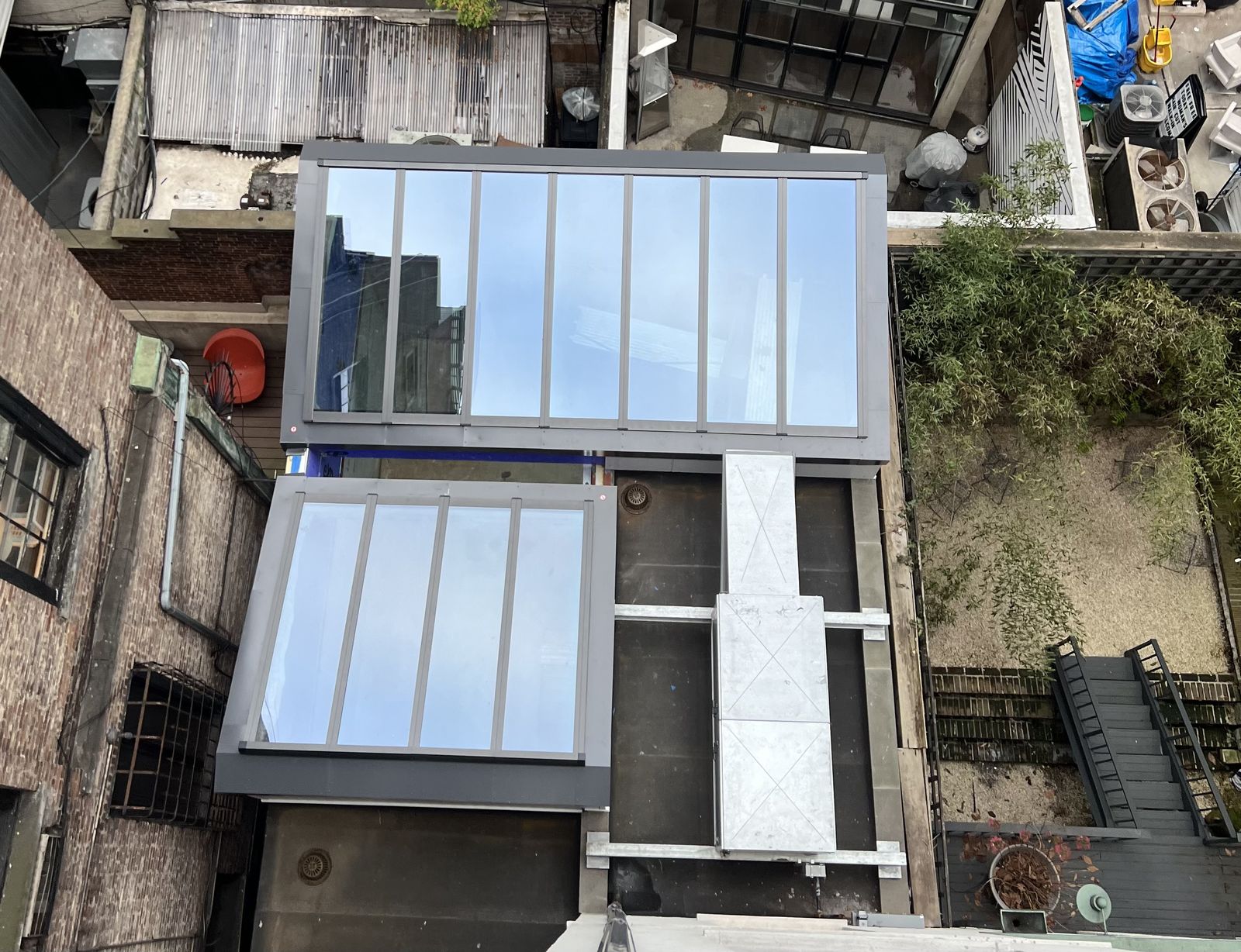
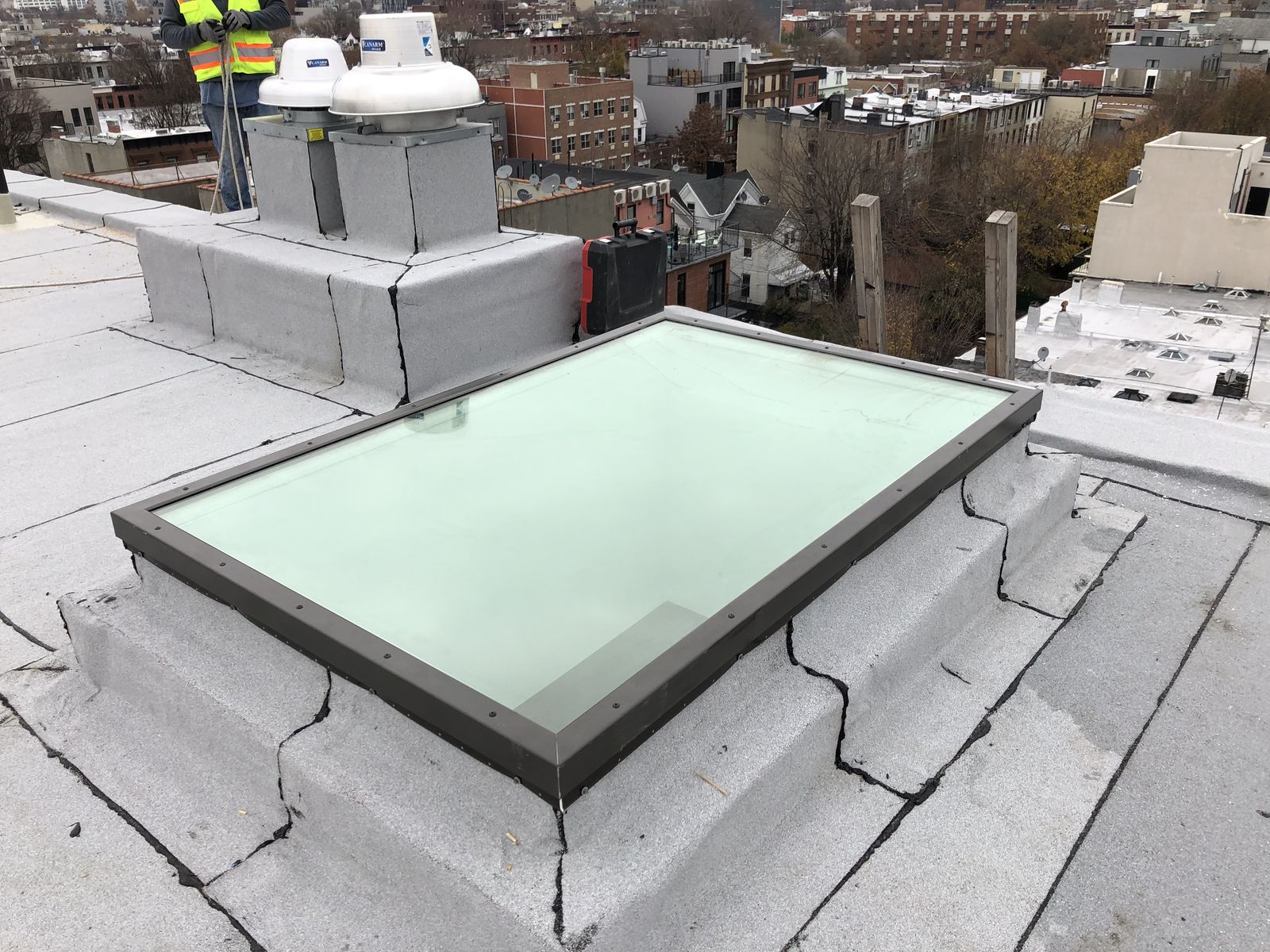
Morningside Heights is mostly big buildings, and that makes it different from the rest of upper Manhattan. Broadway, Riverside Drive, Claremont Avenue and the side streets are lined with prewar elevator apartment houses from roughly 1900 to 1930, six to fifteen storeys, with large flat roofs, tall parapets and stair and elevator bulkheads standing well above them. Mixed in on the streets running toward Morningside Drive there are limestone and brick row houses, and around the university there are institutional buildings with roofs of their own kind. Almost everything here is a co-op or an institution, so the roof is rarely yours alone. Replacement on a sound curb starts at $2,287 installed and a brand new opening starts at $3,850.
A fifteen storey building from 1925 has a roof the size of a small lot, and the clear area on it is smaller than it looks once the water tank, the elevator machine room and the mechanical plant are accounted for. The skylight work these buildings produce falls into two kinds. One is for the top floor apartment, usually over a bathroom, a kitchen or an interior hall where there is no window at all and no prospect of one. The other is for the building itself, which is the stair bulkhead glazing and any original roof glass that has reached the end of its life. The first needs the board, the second usually comes from the board.
The limestone and brick rows on the streets running east toward Morningside Park are the same kind of building as the rest of upper Manhattan, four and five storeys, flat roof, parapet, stair bulkhead at the back. On these the stair skylight is the job, because the plan is deep and narrow and the stair is the only light route into the middle. A lot of these houses have been in multiple occupancy for decades, which means an original opening at the top has often been boarded, plastered or roofed over somewhere along the way. It can usually be reopened, and we look rather than guess.
The bulkheads on these buildings are tall, often brick, and the glazing on top of them is frequently original. That means wire glass in a steel frame, or a very old glass block panel, both of which fail in the same quiet way: the pane stays in place while water runs past the frame and down the stair wall. Replacing bulkhead glazing is building work rather than apartment work, so the specification goes to the board or the managing agent, and it is usually priced as part of a roof program rather than on its own.
Wire glass is the thing to know about in this part of Manhattan. It is in nearly every original stair and bulkhead panel from this era, it looks reassuring because of the mesh, and it is not safety glass under any modern reading. We replace it with insulated glass in a unit sized to the existing opening wherever the opening allows, which usually means the masonry does not have to be touched. Where the opening is an odd size, and on these buildings it often is, the unit gets made to it rather than the opening being cut down to a catalog size.
There is a designated historic district covering part of Morningside Heights, and there are individually designated buildings around the university and the institutions as well, while other addresses a block away are not regulated. We check the address before specifying anything. On a regulated building the practical answer is a low profile flat glass unit set behind the parapet and not visible from the street, and on a tall building that is easier here than almost anywhere else because nobody at street level can see the roof.
Nearly every job in this neighborhood goes through somebody. In a co-op it is the board via the managing agent, and they will want the unit specification, our license and insurance, and in a fair number of buildings an engineer's letter on the roof deck. In an institutional building it is a facilities office with its own procurement process. We assemble that package first because it is what turns a request into an approval. We hold New York City home improvement license 2084179 and we are a VELUX Trained and Approved installer.
Already leaking, or not sure what failed? Read more about skylight repair in Manhattan, what a leaking skylight normally turns out to be, or see our published prices.
The unit cut sheet with the exact model and glazing, the opening size, how the curb and flashing are detailed, our New York City home improvement license 2084179 and our insurance certificates, and the scope written so a board of non builders can follow it. Some buildings also want an engineer's letter about the roof deck, and we flag that before you go to the board rather than after.
Often yes, and the honest answer depends on the roof above you rather than the ceiling below. We look at what is already on the roof, how far the roof deck sits above your ceiling, and whether a shaft is needed. Then the board decides, because in a co-op the roof belongs to the corporation. The technical question is usually the easy half of this.
If it is cracked, if the steel is rusting or if water is tracking down the stair wall, yes. Wire glass is not safety glass in any modern reading despite how it looks, and a cracked pane in a steel frame tends to sit there looking intact while the frame leaks around it. The replacement is insulated glass in a unit sized to the existing opening, so the masonry normally stays as it is.
Parts of it are. There is a designated historic district covering part of the neighborhood and there are individually designated buildings around the institutions, while other addresses nearby are not regulated at all. We check the address against the designated areas before anything is specified. On a tall building a unit set low behind the parapet is invisible from the street in any case.
No. An apartment skylight is a unit on a curb and it starts at $2,287 installed for a fixed replacement on a sound curb. Bulkhead glazing is building work, the openings are usually odd sizes, the masonry and the steel underneath have to be assessed, and it is generally priced from a site visit and often done as part of a roof program rather than on its own. We will not put a number on bulkhead work before seeing it.
Usually. On a deep narrow row house it is worth doing, because the stair is the only way daylight gets into the center of the plan. What we need to establish is whether the opening was simply decked over or whether the framing was cut and headed off, since those are different jobs. That is a look, not a phone call.
Yes. A solar venting unit brings its own panel and battery, so there is no circuit to run up to the roof, which in a 1920s building is usually the obstacle. It opens on a remote and closes itself on the rain sensor. A manual venting unit on a crank or a pole is the alternative where the ceiling can be reached.
Yes, and a fair amount of what we do in this neighborhood is building work rather than apartment work. We will provide a written specification, license 2084179, insurance certificates and a scope that a procurement process can actually put out, and we are used to doing bulkhead and roof glass as part of a larger roof program rather than as a standalone visit.
Yes, supply only is a real part of the business. We size them, pick the mount and the flashing for the roof covering in question, and units start at $527 with the flashing kit and New York City sales tax included. Delivery to the site or collection from us on Gerritsen Avenue in Brooklyn. Our contractor page covers the trade side.
A straight replacement on a sound curb is normally a day. A curb that has to be rebuilt, or a light shaft, runs longer, and bulkhead glazing on a tall building depends on access and on what the roof needs. The part that takes the time in this neighborhood is rarely the work, it is the approval, which is why we put the specification together before you go to the board. Call (718) 646-7053 to start.
Upper East Side · Upper West Side · Yorkville · Harlem · Washington Heights · Gramercy · Murray Hill · Chelsea · Greenwich Village · West Village · SoHo · Tribeca
We cover every part of the borough. See skylights in Manhattan, our published prices, or NYC permits and landmark rules. Serving 10025 and 10027.